Curriculum
Animal and plant features


Special plant features
Some plants have special features that help them survive in their environment. Let us look at some examples below.
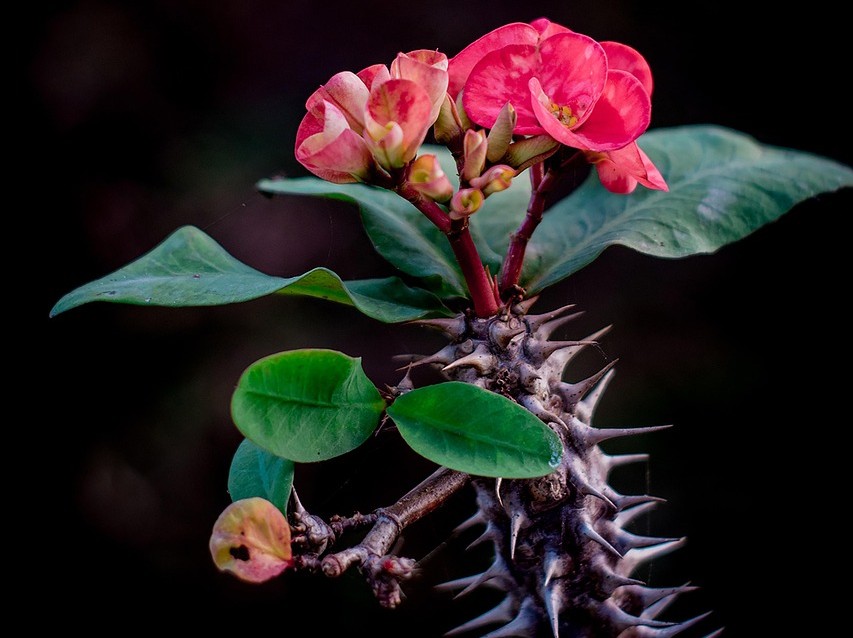
Many plants have thorns to prevent animals from eating or touching them. Thorns can be seen on the crown of thorns plant below. Can you think of any other plants that have thorns?
Plants lose water through their leaves in a process called transpiration. As water is lost through the leaves, the roots absorb more water from the soil.
Some plants live in very dry areas. It would be bad if they lost a lot of water through their leaves. In order to reduce the amount of water lost through their leaves, some plants have very few leaves, very small leaves or even no leaves at all. Look at the two examples below.
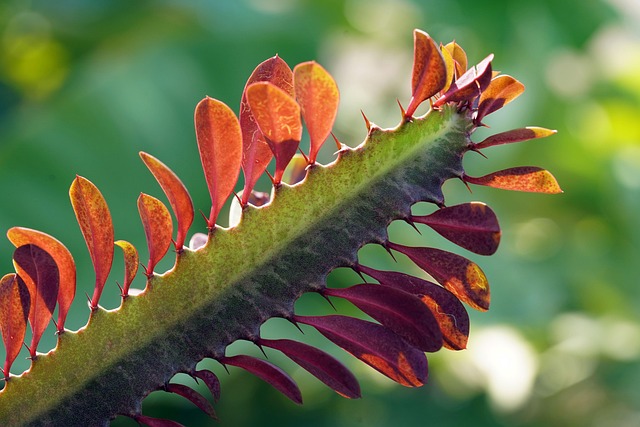
The African milk tree has a few small leaves so it loses less water through transpiration.
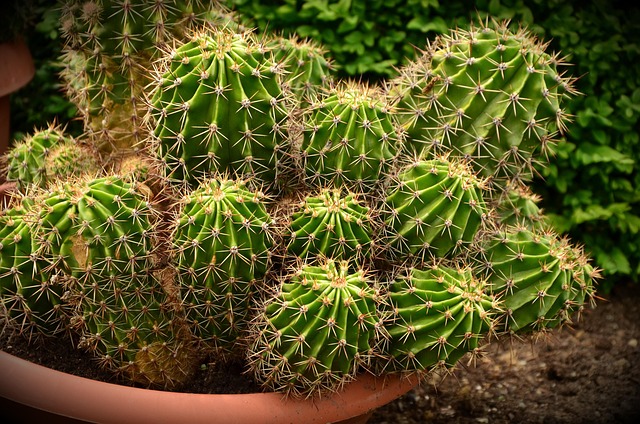
Many types of cactus have no leaves to reduce transpiration.
Some plants have oils or other substances on their leaves that cause pain or irritation. This is meant to prevent animals from eating or touching them. Look at the two examples below.
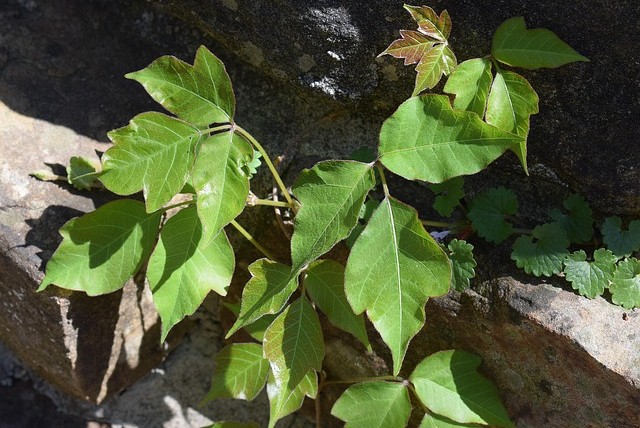
Poison ivy has a special oil on its leaves that causes an itchy rash on the skin.
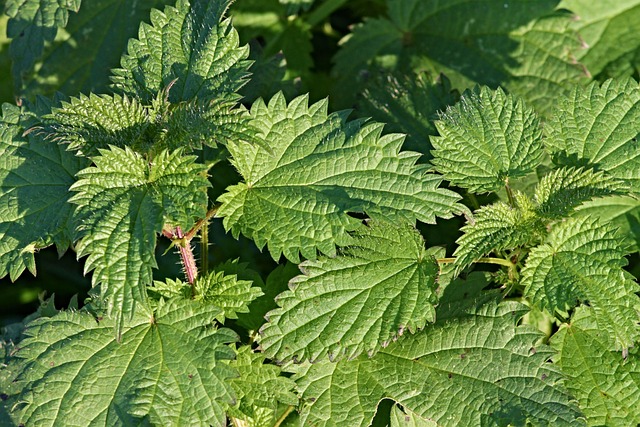
The stinging nettle is covered in tiny things that look like hairs. If you touch the plant they can pierce your skin and inject chemicals that cause a painful rash.
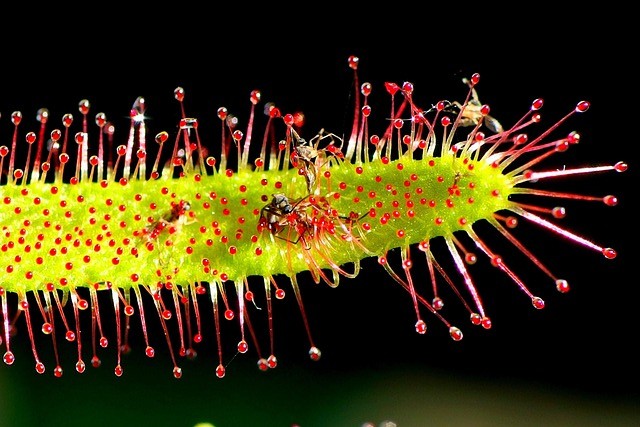
Some plants have special features that allow them to catch insects and other small animals for food. They then digest the animals and absorb their nutrients. The sundew, seen in the picture below has leaves with stick nectar on them. When small insects touch the leaves, they get stuck. Can you see the insects that the plant has caught?
Another plant called the venus flytrap has special leaves that work like little traps. The video below shows a venus flytrap catching flies.