Curriculum


Reflection of light
When light bounces off objects we say that light reflects. Light reflects off different objects in different ways.
Specular Reflection
When light hits a very smooth surface, it is reflected at the same angle which it hit the surface. This is called specular reflection. This type of reflection can be seen on objects such as such as a mirror, polished metal or the surface of a calm lake or puddle. Look at the diagram of specular reflection below.
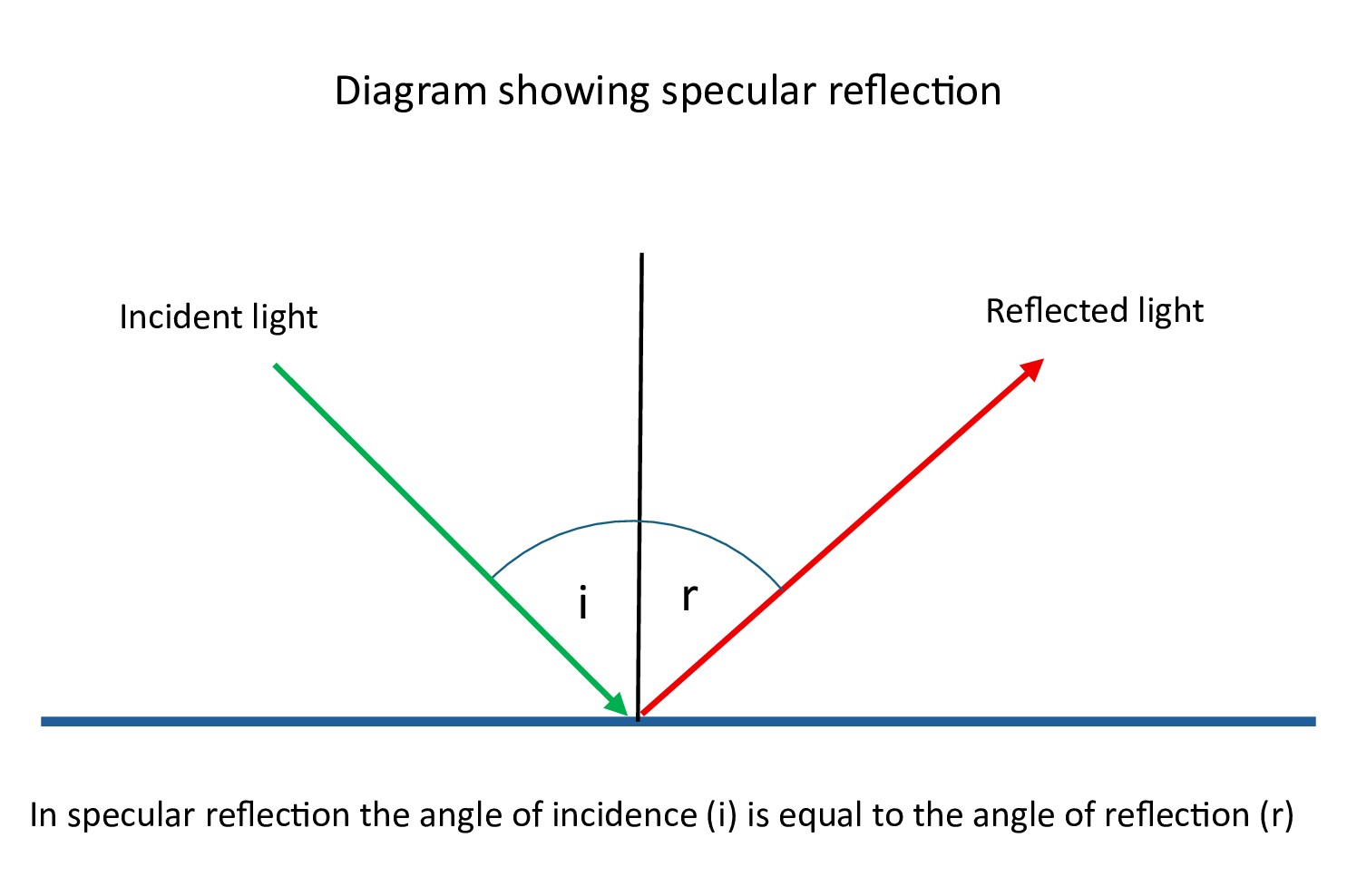
In the diagram above you can see that the light hits the surface at at a certain angle. This is called the angle of incidence. This light is then reflected at an angle which is called the angle of reflection. In specular reflection the angle of incidence is equal to the angle of reflection.
Note: The law of reflection states that when light hits a smooth surface, the angle of reflection will be equal to the angle of incidence.
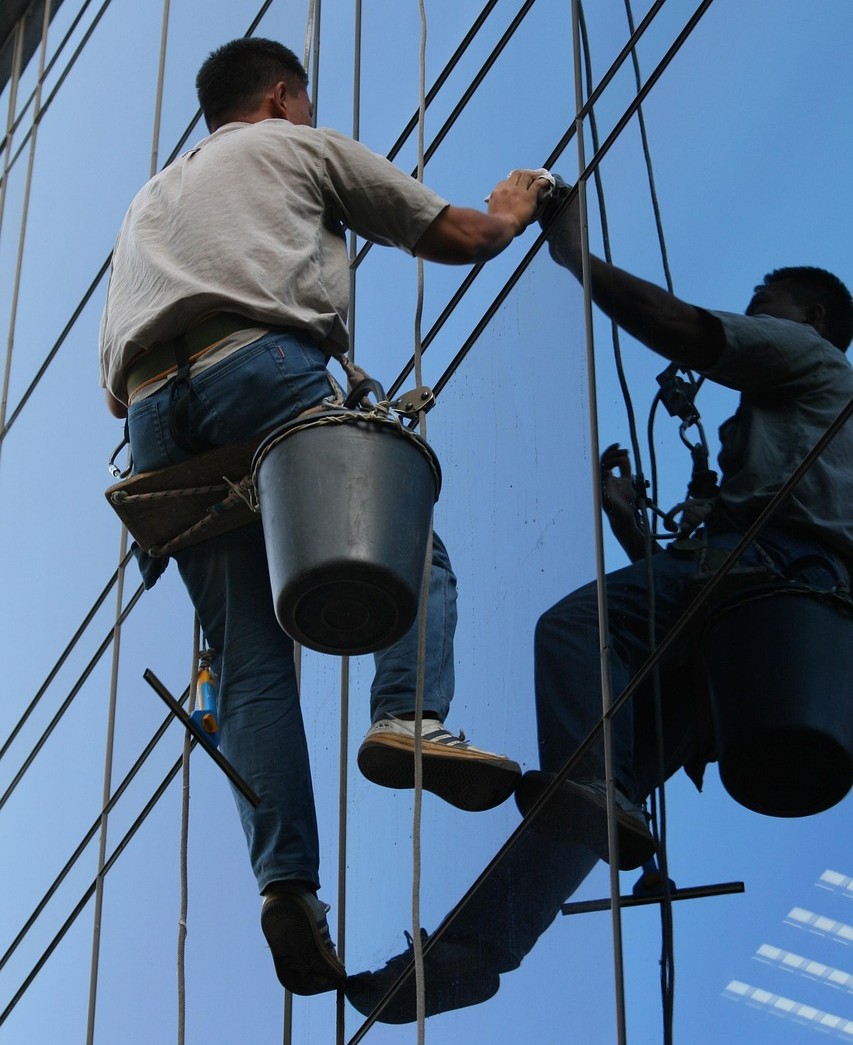
Specular of reflection can produce clear images like the reflection we see when we look in a mirror. In the picture below, specular reflection in the glass on the building gives us a clear image of the worker.
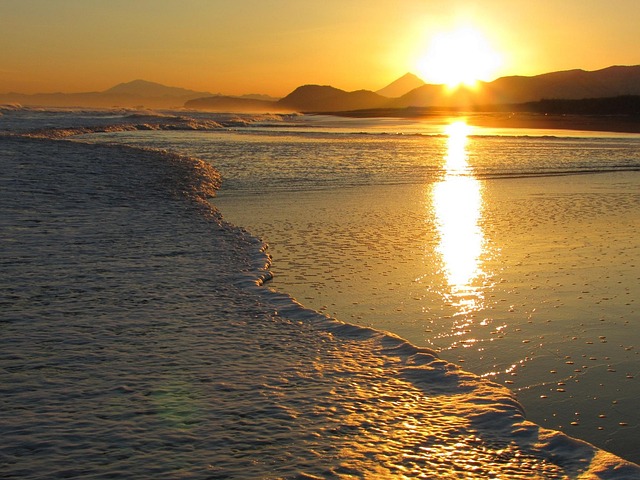
Specular reflection also causes the glare we sometimes see when light hits smooth surfaces and reflects into our eyes. In the picture below we can see the glare caused by sunlight hitting the water and being reflected.
Diffuse reflection
When light hits a surface which is not smooth it reflects in many directions. This is called diffuse reflection. Diffuse reflection is shown n the diagram below. You can see that the light which hits a rough surface is scattered in many directions. This does not create an image on the surface. However this allows us to see the object.
Diagram showing diffuse reflection
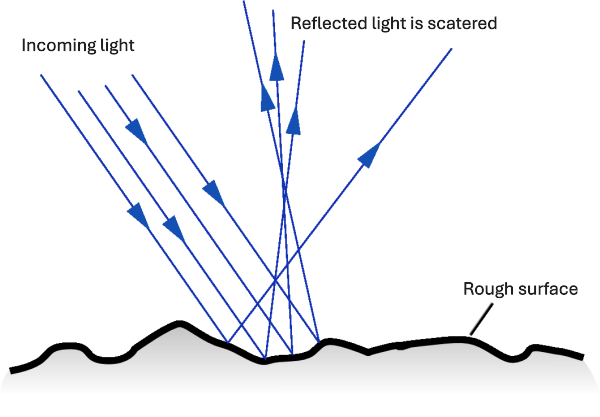
Diagram by Marcelo Reiss and used under this creative commons license